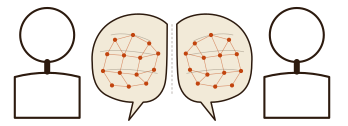

The physician shortage makes specialist access slower, thinner, and more uneven. Doctor2Doctor does not replace formal care, but it helps bridge the gap by giving clinicians a faster way to get peer input from neurologists and psychiatrists when the traditional system is stretched too thin.
Built for clinicians in ND, SD, and MT who are managing complex cases in settings where specialist access is limited or delayed.
What The Physician Shortage Looks Like
The shortage is not just a headline. It shows up in longer wait times, fewer available appointments, and a heavier clinical load for primary care clinicians and other frontline providers. In neurology and psychiatry, those pressures are often especially visible.
Clinicians often end up managing cases that would benefit from specialist perspective while also trying to decide whether a referral is warranted, how urgent it is, and what to do in the meantime.
Why Specialist Access Matters
Specialists do more than confirm diagnoses. They help clinicians refine thinking, rule out dangerous misses, and choose the next best step. When that input is unavailable or delayed, the burden shifts back to the clinician who is already managing the patient.
Complex cases stay in primary care longer
Primary care clinicians often need to keep treating while waiting for specialty appointments that may be weeks or months away.
Uncertainty increases cognitive load
Without easy access to a peer specialist, clinicians spend more time second-guessing and less time moving confidently forward.
Referral is not always the right next step
Some questions need a specialist perspective, but not a formal referral or full consult. That is where a curbside model helps.
How Doctor2Doctor Helps Fill The Gap
Doctor2Doctor is a lightweight peer advice network. It lets clinicians send de-identified questions by text and receive input from neurologists and psychiatrists without needing to navigate a full referral pathway.
Clinicians can get a response on a shorter timeline than a conventional specialist appointment.
No portal setup, no billing workflow, and no formal consult just to ask a focused question.
Specialist peer advice becomes more available to clinicians who do not have deep local networks.
Why The Shortage Is Especially Hard In Neurology And Psychiatry
Neurology and psychiatry are both areas where demand is high, the clinical questions can be complex, and delays in care can have real consequences. Even when a patient is eventually seen, the period before that visit still needs thoughtful management.
- Patients often wait a long time for specialty appointments
- Primary care clinicians must make more interim decisions
- Specialist advice can change whether a referral is needed at all
- Small shifts in management can make a big difference while waiting
Who Benefits Most
The shortage affects everyone, but the clinicians who feel it most are often the ones in rural, small-town, or under-resourced settings.
- Primary care clinicians working far from academic centers
- Clinicians managing neurologic or psychiatric complaints without nearby subspecialists
- Teams carrying high patient volume with limited specialty backup
- Specialists who want to extend their reach beyond their local catchment area
When Clinicians Use It
Doctor2Doctor is most useful when a clinician needs specialist perspective but does not need an immediate formal consultation.
"Do I need to refer this now?" "Is there a safer interim plan?" "Can I manage this here with a little specialist input?"
What Doctor2Doctor Is Not
Summary
The physician shortage makes specialist access harder than it should be. Doctor2Doctor helps soften that gap by creating a fast, practical, low-friction way for clinicians to get peer advice when the system is stretched thin.
Want a better way to bridge the gap?
Join the program as a clinician or specialist and use Doctor2Doctor to get low-friction peer input when specialty access is limited.
Doctor2Doctor is an educational service only. It is not a formal medical consultation. No patient-identifying information is ever shared. No billing occurs. No physician-patient relationship is established.