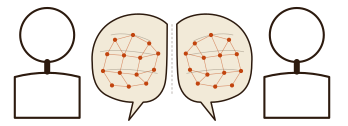

Doctor2Doctor is a grant-supported, text-based peer advice network that connects clinicians with neurologists and psychiatrists for informal, de-identified peer advice. It is designed to help clinicians get quick, practical input from specialists without initiating a formal consultation or referral.
Now piloting for clinicians in ND, SD, and MT. The specialist network of neurologists and psychiatrists is nationwide.
Primary care physicians (PCPs) working in local settings face a problem. They often see patients with complex neurological or psychiatric conditions that sit in a gray zone. They’re not severe enough to be referred straight to specialist care, nor are they something the PCP sees every day.
Sound familiar? What’s needed is a service that offers PCPs the specialist advice of an eConsult with the ease and familiarity of an informal curbside conversation.
That’s where Doctor2Doctor comes in.
It’s a grant-supported, text-based peer advice network connecting PCPs with specialist neurologists and psychiatrists. It’s not a formal consult or referral. Instead, PCPs have a chance to ask questions about their patients and receive much-needed practical input.
Why Does Doctor2Doctor Exist?
Trying to get specialist support through traditional avenues can be slow. eConsults often require you to submit questions through a cumbersome EHR system, while a formal referral takes weeks or even months to complete. PCPs still need to make decisions today.
Many have specialist friends to call but don’t want to burden them with everyday questions. Doctor2Doctor bridges this gap by providing timely clinician-to-clinician input at the point of decision-making from specialists available to receive your text.
The Clinical Gap It Helps Fill
Not all cases fit neatly into either primary care or specialist support. Nor does every medication check require a specialist referral. Doctor2Doctor supports these middle-ground cases.
For example, a patient may have new numbness and tingling that does not clearly suggest an emergency but still leaves the PCP unsure whether to order labs, imaging, or a neurology referral.
Or a patient may be having side effects, a partial response, or a possible interaction with a psychiatric medication. The case may not need urgent psychiatric care, but the PCP may still want to sense-check the medication plan before making a change.
How Doctor2Doctor Works
Send a question
A clinician sends a brief, de-identified case question by standard SMS text message. There is no app to download and no portal to log into.
A specialist reviews it
A neurologist or psychiatrist reviews the question using the relevant clinical context provided.
Guidance comes back
The specialist provides informal, practical input to support the clinician’s thinking. It helps with next steps, but it does not create a formal consult or ongoing specialist responsibility.
Who Doctor2Doctor Is For
Doctor2Doctor is typically used at clinical decision points such as before referring a patient, while a patient is waiting to see a specialist, or when sense-checking a diagnosis or care plan.
It’s designed for:
- Primary care physicians
- Nurse practitioners
- Physician assistants
- Clinicians managing neurology or psychiatry questions
- Clinicians in rural, underserved, or specialist-limited settings
What Doctor2Doctor Is Not
Doctor2Doctor is useful for practical advice, but it is not a replacement for urgent care, formal referral, or direct specialist evaluation when those are needed.
Doctor2Doctor vs Curbside Advice, eConsults, and Referrals
| Option | Best for | Main limitation |
|---|---|---|
| Curbside advice | Quick input from someone you know | Depends on personal networks |
| eConsult | Documented specialist review | More workflow and admin |
| Formal referral | Direct specialist evaluation | Wait times and patient burden |
| Doctor2Doctor | Informal peer input by text | Not a formal consult |
How Doctor2Doctor Supports Better Referrals
Referrals are still a critical part of specialist care. But not every specialist question needs to become a referral right away. Doctor2Doctor can help clinicians think through the next step, manage appropriate cases in the local community, and make referrals more targeted when they are needed.
A specialist peer can help:
- Decide whether symptoms may warrant a neurology or psychiatry referral
- Clarify what initial workup may be useful before referral
- Sense-check medication choices or management options
- Think through cases that are complex, unclear, or hard to place
- Decide what can be done while the patient waits for specialist care
Doctor2Doctor brings curbside advice into a structured, accessible format, helping clinicians get timely specialist input and supporting better decision-making without adding unnecessary friction.
Ready to get peer advice?
Doctor2Doctor is now accepting waitlist applications in North Dakota, South Dakota, and Montana.