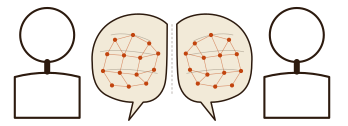

Mentorship is built into the work. When specialists answer clinician questions through Doctor2Doctor, they are not just closing a case. They are helping shape how another clinician thinks, triages, and manages similar patients next time.
Designed for neurologists and psychiatrists who want to share expertise, extend their reach, and support clinicians in ND, SD, and MT.
Why Mentorship Matters
Specialist advice is most valuable when it changes more than one decision. A good answer helps with the current patient, but it also gives the clinician a framework they can use again. That is where mentorship has real value.
Doctor2Doctor creates a space for that kind of support. The specialist is not simply reacting to a request. They are modeling how to think through a complex neurologic or psychiatric problem in a practical, teachable way.
What Specialist Mentorship Looks Like
Answer the immediate question
Offer focused guidance that helps the clinician move forward safely with the patient in front of them.
Explain the reasoning
Share the thinking behind the recommendation so the clinician can understand the pattern, not just the answer.
Help shape future judgment
Turn a one-time consult into a reusable lesson that improves confidence on the next similar case.
How Doctor2Doctor Supports Specialists
Many specialists want to teach and mentor, but formal academic roles are not the only way to do that. Doctor2Doctor lets specialists contribute in a lightweight format that fits real schedules and still has measurable value for clinicians on the ground.
No committee, no standing obligation, and no institutional program to manage just to share expertise.
Your answer can affect immediate care and improve how the clinician approaches similar cases later.
Mentorship extends beyond your own clinic, city, or health system to clinicians who need a peer.
Why Clinicians Value Mentor-Like Input
Clinicians are often managing complex cases with limited time and limited specialty access. A thoughtful specialist response does more than reassure them. It helps them build confidence, reduce uncertainty, and improve the next clinical decision.
- They get practical guidance from someone who has seen similar cases
- They learn how specialists think about risk and next steps
- They can refine their own triage and referral habits
- They build a relationship with a specialist peer over time
Who Should Consider Joining
If you are a neurologist or psychiatrist who enjoys teaching, advising, or mentoring, Doctor2Doctor gives you a way to do that without taking on a formal role.
- Specialists who want to support clinicians in underserved regions
- Physicians who enjoy teaching through real-world clinical reasoning
- Experts who want to extend their impact beyond a single clinic
- Specialists who prefer flexible, asynchronous participation
What It Is Not
The best mentorship is often just a clear, timely answer from someone who has been there before.
Summary
Doctor2Doctor gives specialists a practical way to mentor clinicians in the flow of real work. It is simple, asynchronous, and built around the idea that expertise should travel farther than the walls of a single institution.
Want to mentor through real cases?
Join the specialist network and share practical guidance with clinicians when they need it most.
Doctor2Doctor is an educational service only. It is not a formal medical consultation. No patient-identifying information is ever shared. No billing occurs. No physician-patient relationship is established.